

Daily Load Shedding
In recent news, the Prime Minister has addressed the growing concern of 7-hour daily load shedding, providing the nation with important insights into the root causes behind the ongoing power outages. This article explores the reasons, impact, and potential solutions to the energy crisis that is affecting millions of people across the country.
Understanding the 7-Hour Daily Load Shedding
Load shedding is a term used when power supply is deliberately interrupted due to the inability of electricity production to meet the demand. The most recent announcement by the Prime Minister revealed that the country has been facing load shedding for up to 7 hours each day. This situation has left people struggling with disrupted daily routines, especially in urban and rural areas.
The duration of load shedding has varied across regions, with some areas experiencing longer outages due to a combination of issues in power production, infrastructure, and policy mismanagement.
Causes Behind the 7-Hour Load Shedding
1. Energy Production Shortages
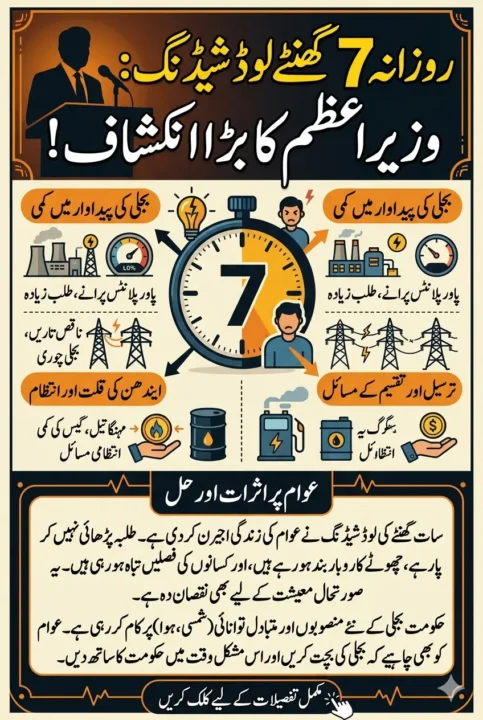
One of the main reasons for the daily load shedding is the shortage of energy production. The demand for electricity has steadily risen as the population grows and the number of electrical appliances increases. However, energy production has not kept up with the demand.
Many power plants are either outdated or unable to generate enough electricity to meet the rising needs of the population. Additionally, a lack of investment in new power projects and infrastructure has contributed to the problem. The Prime Minister highlighted these issues as critical factors leading to the ongoing load shedding.
2. Transmission and Distribution Issues
Even when electricity is produced, the infrastructure required to distribute it to homes and businesses is often insufficient. Many parts of the country still rely on outdated transmission lines and power stations that are prone to breakdowns and inefficiency.
In some areas, power theft has also exacerbated the problem. With people tapping into the grid illegally, the electricity supply becomes even more unreliable, leading to frequent outages and longer periods of load shedding.
3. Fuel Shortages
Another factor contributing to the power shortage is the ongoing fuel crisis. Many power plants rely on imported fuels like oil and gas, which are becoming increasingly expensive. The rising cost of these fuels has strained the ability of the government to ensure uninterrupted power production.
The government has made efforts to address this issue by exploring alternative energy sources. However, these initiatives are still in the early stages, and the reliance on fossil fuels remains a significant challenge.
4. Environmental Concerns
The Prime Minister also pointed out that environmental concerns play a role in power generation. The country has committed to reducing its carbon footprint and adopting more sustainable energy practices. This shift away from fossil fuels towards greener, renewable energy sources has, however, created transitional challenges. The country is still in the process of developing the infrastructure to harness solar, wind, and hydroelectric power efficiently.
This process takes time, and until renewable energy sources become more reliable and widespread, the country continues to face the challenges of maintaining a stable power supply.
5. Mismanagement of Resources
A significant cause of the energy crisis is the mismanagement of available resources. The Prime Minister acknowledged that political instability and inefficient management have hindered the progress of energy projects. Previous governments have failed to prioritize investment in the energy sector, resulting in delayed projects and a lack of maintenance for existing power plants.
In addition, corruption and poor governance have also been identified as factors that have led to the current state of the country’s energy sector. The failure to address these issues has made it difficult to provide a consistent electricity supply to the people.
The Impact of 7-Hour Load Shedding on the Public
The ongoing load shedding has had far-reaching consequences for individuals, businesses, and the economy as a whole. For ordinary people, daily life has been disrupted. Students are unable to study, families face difficulty in performing household tasks, and small businesses suffer due to frequent power outages.
In urban areas, where most industries and commercial establishments operate, the impact of load shedding is even more severe. Factories and businesses lose valuable production hours, which results in financial losses and reduces overall productivity.
Also Read: CM Punjab Laptop Scheme Registration 2026: Apply Now
In rural areas, the lack of reliable electricity affects agricultural activities. Farmers depend on electricity for irrigation systems, especially during crucial crop seasons. With power outages becoming more frequent, agricultural output has been compromised, leading to food insecurity in some regions.
Economic Strain
The economic implications of load shedding are equally alarming. With businesses facing increased operational costs due to energy disruptions, the country’s economic growth is at risk. The loss of industrial output also hampers the export sector, further compounding the financial challenges.
Additionally, the energy crisis discourages foreign investment. Investors are reluctant to put their money into a country where reliable energy is not guaranteed. This slows down development in other key sectors, such as manufacturing, infrastructure, and technology.
Steps Taken by the Government
1. Short-Term Measures
To mitigate the impact of load shedding, the government has taken several short-term measures. These include:
- Energy conservation campaigns: Encouraging people to reduce their energy consumption during peak hours to ease the burden on the power grid.
- Introduction of backup power sources: Temporary solutions like emergency generators have been provided to critical infrastructure like hospitals and government offices.
2. Long-Term Solutions
For long-term relief, the Prime Minister emphasized the need for sustained investment in the energy sector. The government is looking to:
- Develop alternative energy sources: Expanding solar, wind, and hydroelectric power generation to diversify the energy mix.
- Modernize power plants: Updating and upgrading outdated power plants to improve efficiency and increase capacity.
- Strengthen transmission and distribution networks: Expanding and modernizing the electricity grid to reduce power losses during transmission.
The Prime Minister also stated that efforts would be made to improve the governance of the energy sector to ensure better management of resources and transparent decision-making processes.
Read More: Maryam Nawaz Solar Panel Scheme 2026
The Role of Citizens in Solving the Crisis
While the government plays a crucial role in resolving the energy crisis, citizens also have a part to play. By adopting energy-efficient practices, individuals can reduce the demand for electricity during peak hours. Simple actions like turning off unused lights, using energy-efficient appliances, and switching to LED bulbs can make a difference.
Furthermore, citizens can contribute to the development of renewable energy sources by embracing solar power for their homes and businesses. With the government’s support, solar energy can become a more accessible and reliable option for many.
Conclusion
The Prime Minister’s revelation regarding the reasons behind 7-hour daily load shedding has shed light on the complex factors contributing to the ongoing energy crisis. Energy production shortages, transmission issues, fuel shortages, environmental concerns, and resource mismanagement have all played a part in the current situation.
While the government is taking steps to address these challenges, the journey to resolving the energy crisis will take time. In the meantime, it is essential for both the government and citizens to work together to find solutions and reduce the impact of load shedding on daily life and the economy. Only through collaboration and investment in sustainable energy solutions can the country move towards a more reliable and stable energy future.